

When losing is actually a win
On finding (and keeping) yourself

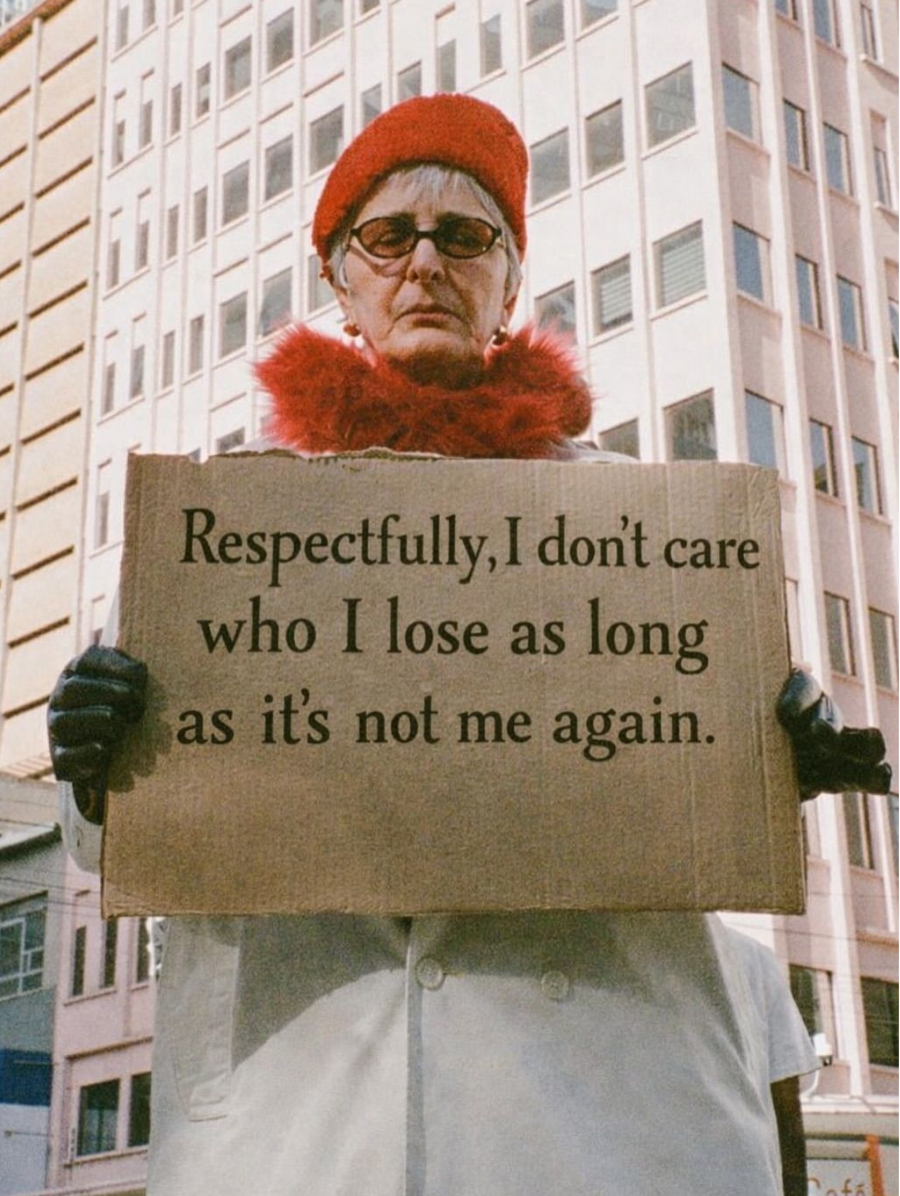
I was in middle school when the existential question of “Who am I?” first popped into my head. I believe it was sixth grade, a time when everything started changing and I began to take stock of where I fit within the social schema. It was when I really started to get into journaling, writing down my innermost thoughts and insecurities, my deepest fears and dreams, and when the comparison game I’ve always played with myself really started to ramp up.
I saw myself solely in the context of how I compared to other people. I’d look at my best friends and classmates and think, “I’m not as smart as her. I’m not as pretty as her. I’m not as confident as her. I’m not as talented as her.” Naturally, it never made me feel great. Instead, it left me wondering who I was if I wasn’t any of these things.
At that age, and honestly for much of my life, acceptance was what I was chasing. My need for it was dire, a coping skill I’d developed to survive my emotionally distant household. Being unliked was not an option. My tiny reptilian brain told me it was dangerous. As a result, I’d become whomever I needed to be in order to achieve it. I, it turned out, was a chameleon.
For a long time I felt this was a good thing. I considered myself adaptable, and this adaptability made me a very open person. I wanted to be accepted, therefore I was accepting. This mindset is what helped me forge a strong network. I had best friends, soccer friends, neighborhood friends, church friends, you name it. I could fit into any group, and it made me feel safe in nearly every scenario. No matter where I was, I likely had a friend there. Looking back, it’s a pretty ingenious strategy. That’s how trauma works, after all: It’s the thing that hurts us the most, but also the thing that keeps us safe.
And like a lot of trauma, especially complex trauma, it was completely unconscious to me. I wasn’t picking and choosing who I was friends with. I wasn’t just a chameleon sitting on my branch, content if someone came by or not. Instead, I was climbing up any tree I could find and shapeshifting to match whomever I found there as a matter of survival. It led me to some great people, amazing relationships I still have today. But it also, as you can imagine, led me to some who were much less so.
Adaptability, in my case, stemmed from a low self esteem. I wasn’t confident being myself. I may not have known exactly who I was, but I’d learned if I was what felt like myself, I was often wrong. And when I was wrong, I was ignored or ridiculed. So, I learned how to do what was “right,” depending on who I was with. I said what I thought people wanted to hear. I did the things I thought they’d want done. I shed my chameleon skin and adopted a more consistent title: people pleaser.
The thing about adaptability and low self esteem is that you’re always acquiescing to other people. You doubt yourself, so you put your confidence in them. On the whole, this is fine, as most people are kind. They don’t think of your flexibility as anything but helpful, your low confidence as anything but humility. To them, you are someone worth treasuring. To others, however, you are something to exploit.
Just as someone’s parental issues might get them into a bad romantic relationship, my people pleasing tendencies drew me to toxic friendships. In my twenties, I found myself in two friendships with the same type of person. On the surface, it seemed like a good setup: I was Type B, they were Type A. They were organized, and I went with the flow. This dynamic might seem like it’s a yin and yang, but there is always an imbalance.
A Type A person is almost always Type A because of their own trauma-induced coping skill: control. Where acceptance was a means for survival for me, having control is theirs. It’s compulsory and may or may not be conscious. They might not realize what they’re doing…or, worst and highly probable case, they are fully aware. Either way, it’s a problem.
For me, it meant I gave them free reign over me. I let them dictate my schedule, bullying me into events I didn’t want to go to paid for with money I didn’t want to spend. I let them judge and criticize both me and others without calling them out or telling them it was out of line. Worst of all, I trusted them more than I trusted myself, letting them believe their thoughts and opinions held more weight than my own. In both cases, of course, they took advantage of it. They saw me as small and malleable, the perfect object for their control. They had no respect for me—and how could they when I barely had any for myself?
In my thirties, now shedding my chameleon skin and my people pleasing habits, I’ve found my way back to myself.
However, it’s also meant I’ve had to shed people along the way.
It turns out when the timid Type B person a toxic Type A thinks they have full power over finally finds their spine, the Type A loses their shit. Nothing is more of a threat to their ego than their follower forging a different path and erecting firm boundaries. They no longer have control, but they still possess the need for it. So, they lash out. They grasp greedily for the higher ground by striking the lowest blows.
Because these people, flawed as they are, were still your friends—still people you cared about at one point in your life—this hurts. However, it shows you who you both really are. It teaches you the very important lesson that you’re not able to attract all the right people for you when you’re not being yourself. You can’t set boundaries when you aren’t using your voice.
It also makes it that much easier to walk away.
In working through these pivotal moments in therapy, my therapist has said something that struck me: “The most important relationship you have in this life is the one with yourself.” It’s so clear to me now how right she is. Perhaps that’s why I grappled so much in sixth grade. Maybe I sensed the importance but couldn’t yet cultivate it for myself.
So, who am I? I finally have an answer to my existential question.
I am my own best friend. And I’m here to stay.
As usual, I admire the hard work you have put into yourself. It’s very brave and shows persistence and strength.
"In my thirties, now shedding my chameleon skin and my people pleasing habits, I’ve found my way back to myself." 🗣️🗣️🗣️
So perfectly captured and exactly how I'm feeling lately too. Such a lovely essay 🫶